Why Successful Solutions Are More Than Just Technology
Introduction
In the world of business analysis, it is a common pitfall to hear the word "solution and immediately think of software. When an organization identifies a problem such as siloed data or a static customer base the knee-jerk reaction is often to go out and buy a new tool.
However, technology is only one part of a successful transformation. To deliver true value, a Business Analyst (BA) must look at the whole picture through the lens of the POPIT (People, Organization, Process, Information and Technology) framework.
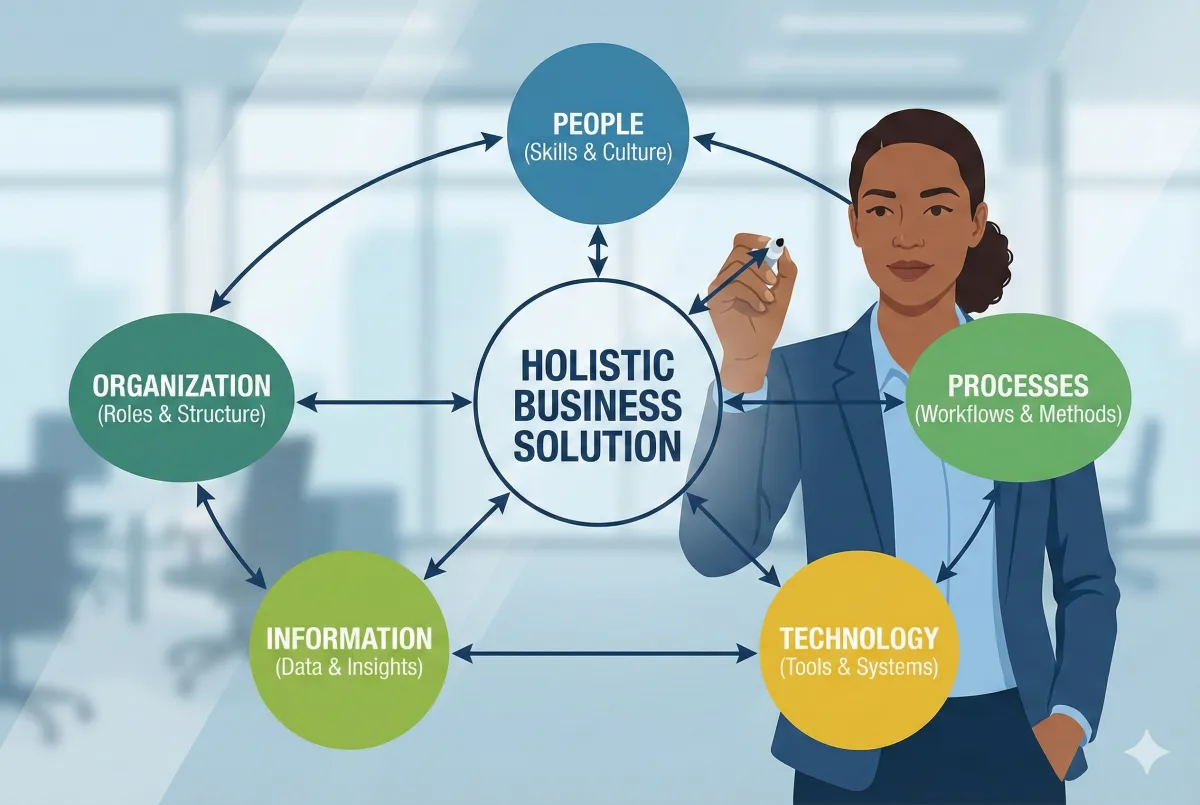
The POPIT model is a fundamental business analysis technique used to take a holistic view of a business system. It provides a rigorous framework for analyzing the problems inherent in a business situation and identifying the full impact of potential solutions. By ensuring that every change is viewed across these interrelated pillars, you move from simply implementing a tool to enabling a business transformation.
Key Takeaways
A Solution is Holistic: It is never just a piece of software; it always involves the people, the organization's structure, and the processes used to deliver service.
Avoid the Automation Trap: Automating an inefficient or broken process only makes it fail faster; use POPIT to fix the process first.
Manage Cultural Change: Every solution impacts the organizational culture and the individuals within it; POPIT ensures you plan for that impact.
Data Over Tools: Information is a core asset; the technology should be chosen based on how it supports the data and the people using it.
What is the POPIT Framework?
The POPIT model provides a comprehensive view of a business system, ensuring that no part of the organizational change is left out. It breaks a solution down into four essential, interconnected elements:
People: The individuals who perform the work. This includes assessing their skills, their motivation, and whether they have the proper training to adopt new mindsets, such as the Agile philosophy.
Organization: The internal culture and structural environment. It involves reviewing roles and responsibilities like how a BA role might shift when a Scrum Master is introduced and ensuring management styles support the new way of working.
Processes: The sequential or parallel steps followed to deliver a product or service. Processes define how the work gets done and identify where bottlenecks or redundancies might exist.
Information and Technology: The tools that support the people in executing the processes, and the data itself. This involves understanding how new technological support tools integrate with existing ones and how data is analyzed and incorporated into the final solution.
Why is the POPIT Framework Important?
Without this holistic view, projects frequently fail because they address only a symptom of the problem rather than the underlying systemic issues. For example, a company might implement a centralized Customer Relationship Management (CRM) system to solve the issue of siloed Excel spreadsheets. However, if the Organization still rewards siloed behavior, or if the Processes for entering data remain broken, the expensive new Technology will not provide the intended growth.
Using the POPIT framework allows a Business Analyst to identify risks and gaps early. It helps you identify where reuse is possible and where there are gaps that must be addressed to support business agility. It forces you to ask: Do we have a technology problem, or an organizational culture problem? Is the process fundamentally broken, or is the software simply outdated?.
How to Apply the POPIT Framework (Step-by-Step)
Here is a practical framework you can follow to ensure your next business analysis project is truly holistic:
Step 1: Analyze the Current State (The "As-Is") Before recommending any change, you must understand the current business system. Identify who the current stakeholders are (People), the existing management culture (Organization), current workflows (Processes), and the data and tools in use (Information and Technology).
Step 2: Define the Desired Outcome (The "To-Be") What does success look like in each of the four areas?. Start with the value, not the tool. If the goal is to expand the customer base, define what people skills, organizational support, and streamlined processes are required alongside the technology.
Step 3: Identify Gaps and Impacts Perform a gap analysis to see what is missing across all POPIT elements.
People/Organization Gaps: Is there skepticism or a lack of training? Do roles need to be revised?
Process Gaps: Are there redundant steps that need to be removed?
Info/Tech Gaps: Is the data siloed? Does the current infrastructure support the new process?
Step 4: Design the Integrated Solution Create requirements that address all four areas. Your documentation should include not just software features, but also updated process maps, training requirements, and defined organizational roles.
Step 5: Validate and Evaluate Work with stakeholders to ensure the proposed solution is feasible within their specific context. After implementation, evaluate the solution to see if it is delivering real value not just if the software is on but if the people and processes are performing more efficiently.
Frequently Asked Questions
Is information different from technology in POPIT? Yes. Technology refers to the tools (software, servers, apps), while Information refers to the data itself and how it is modeled and used. A BA must ensure the data is accurate and visible, regardless of which tool holds it.
Why do BAs often ignore the Organization part? It is often because organizational culture feels soft or hard to define. However, ignoring the organizational impact such as management resistance or shifting roles is a primary cause of project failure.
How does POPIT support business agility? By looking at the whole system, you can identify where processes or information can be reused across different departments, allowing the business to adapt more quickly to market changes.
Final Thoughts
A Business Analyst is more than a technical requirements gatherer; you are a holistic value creator. By moving beyond the technology and embracing the POPIT framework, you ensure that business transformations are resilient and successful. The next time you are tasked with a project, remember that the most powerful tool in your kit isn't the software it's your ability to see the people, the organization, the processes, and the data all working in harmony.


